Selasa, 30 Desember 2008


$99 Acer Aspire One netbook with 3G connectivity for sale at RadioShack starting today


When you consider the same model (Intel Atom processor, 1 gig RAM, 160 gig hard drive, 8.9-inch screen, Windows XP) the $99 Aspire One from Acer at RadioShack sounds like an absolute steal.
EXCEPT: To get the $99 price at RadioShack, you also have to sign up for a two-year 3G data contract from AT&T at $60 per month.
So that's an extra $1,440 over the life of the contract. Now, you are getting something for your money -- being able to hop onto the same high speed 3G data network as the iPhone and other 3G phones means you'll almost never be without Internet access on your Aspire One.
So, if you are interested in getting the 3G, this could be a great deal for you. Just know what you're signing up for before you buy this model.

Asus N10JC Notebook


The Japanese corporation of Asus has announced that the new N10JC laptop is available for purchase. This small yet good notebook has a small LCD screen that measures 10.2-inches and provides a WSVGA resolution of 1,024×600 pixels. The processor is powered by an Intel Atom N270 at 1.6GHz, and the graphics card is a GeForce 9300M GS.
Priced at $720 and boasting Windows XP Home Edition as the operative system, the Asus N10JC has 1GB of RAM, 160GB on the hard-drive, and a HDMI output for high-quality image. Other features include WiFi, a 1.3-megapixel camera, and a 4-in-1 memory card slot.

Asus G71


Asus announced the G71 gaming notebook backing October, but omitted to mention the pricing or, indeed, an actual release date. Now we have both and while neither is surprising, the former is still pretty shocking. So, available any time now the quad-core G71 carries a £1,999 MSRP with a cheaper dual-core spec also available starting from £1,349.
Though admittedly expensive, that kind of money does get a pretty decent spec for a portable (compared to a brick bag of bricks). CPU aside there's no difference in the systems, which stack up as follows.
Intel quad-core QX9300 (2.53GHz, 1,333MHz FSB, 6MB cache) dual-core T9400 (2.53GHz, 1,066MHz FSB, 6MB cache).
17in 1,920 x 1,200 Display (plus a secondary VFD above the keyboard)
4GB DDR3 RAM (2 x 2GB)
nVidia 9700M GT (512MB GDDR3)
2GB Intel Turbo Memory module
500GB hard drive space (2 x 250GB RAID 0)
Blu-ray Drive
Windows Vista Ultimate In Asus' usual fashion, the systems also come in a pretty comprehensive bundle, packing a backpack for (ah-ha) carrying the G71 around, a mouse and a headset. Okay, so taking such a laptop to the occasional LAN party might be within the realms of possibility, but calling the G71, in either its quad- or dual-core versions, is a bit of a misnomer if you ask me.
Still, if you've got money to burn and an Alienware system doesn't float your boat, then you know what to do.

Rabu, 10 Desember 2008

Travel Keyboard Is Full Sized and Actually Looks Usable

Portable keyboards are a godsend for many laptop users (and in our opinion, all netbook users). This one is light, compact, and sports full sized keys. Nice.

New from Atek, the OnBoard Travel Keyboard has all 99 keys as well as a numeric keypad. It comes with a protective cover which slides over the top of it, so it'll be easy to just throw in a laptop case or other bag. The keys are indeed all full sized and it weighs only 1.4lbs.

This appears to be a straight up keyboard. No folding, bending, or other "creative" ways of making the keyboard portable. It's just a plain old keyboard which they made lightweight and gave a travelcase to. Perfect. It does look like they shaved a little space off of the function keys, but we can live with that.

It even comes with an inflatable palm rest for "extra comfort".

You can pick one of these puppies up here for $29.95.

SanDisk Secure USB Drive Now Available For Macs

SanDisk has released a Cruzer Enterprise USB drive which is as secure as it is compatable with OS X - which is to say, completely.

SanDisk is calling it "the first secure USB flash drive to fully support Apple Mac OS X computers," and they claim it is compatible with both 10.4 (Tiger) and 10.5 (Leopard). For some technical jargon straight from the lion's mouth, the drive meets USB security and compliance needs through a "hardware-based 256-bit AES USB encryption solution that puts mandatory access control on all files as protection against theft of loss of the drive." Sounds secure to us.

Other features include the ability to log in and shut down access to the encrypted areas, manage password settings, launch online support, and set a number of other preferences. The drive is available for both Windows and Mac and will be sold in 1/2/4/8GB formats. The price will be between $60-$300.

HP Mini 1000 Officially Goes 3G

HP is announcing that its Mini 1000 netbook can, for a fee, be equipped with mobile broadband from either AT&T or Verizon.

First it was a rumor, then a hack, and now it's finally official news. The HP Mini 1000 can finally be purchased with embedded 3G capabilities.

We applaud HP's decision to help bring 3G to the US, but the deal just doesn't look as good as some others we've seen. Not only will it cost you a full $199 to purchase the upgrade without any mention of subsidies from the carriers, but it seems you cannot even order the upgrade and still get an SSD in your unit. If you try to customize your Mini 1000 on the site with WWAN, you will be forced into getting the HDD.

We haven't gotten our hands on the 3G Mini 1000 yet, so hopefully it's lightning fast or has some other great perk to make it worth the extra cost. Otherwise, unless you really just like the netbook, it might be best to try another netbook for 3G or at least wait until prices come down.

$100 Netbook Too Good To Be True

Rumors that Coby Electronics would be coming out with a $100 netbook have been officially squashed.

It was reported in a number of areas a few days ago that Coby Electronics Corporation would be developing mini-notebooks at a cost of less than $100 by Spring 2009. If it sounds too good to be true, that's because it is.

The original article was from Arkansas.IndyMedia.org and has been discredited by Coby. They produced an emphatic statement which meakes it clear that the company is not "producing a PC nor is one headed to market at any price under the company's name."

Coby admitted that they keep their noses in all consumer markets, ostensibly including netbooks, but that at this time they are most certainly not developing a laptop. They currently produce MP3 players, LCD TVs, and other sorts of consumer electronics.

Selasa, 09 Desember 2008

$100 Netbook No Longer Too Good To Be True

Acer is offering an Aspire One for just $99 (plus a huge asterisk) at Radioshack.

Sometimes, it takes a strong website to admit when it's wrong. Not that we reported false news, mind you - Coby is certainly not producing a sub $100 laptop - but we were wrong in saying it's too good to be true. Acer has taken the mantle and is now offering their 3G Aspire One for under $100.

Plus some fine print. You may want to click on that picture and enlarge it before marveling at the bright red $99.99 for too long.

The netbook is only $99 when you sign up for a two year commitment to an AT&T wireless plan at $60 a month or more. The netbook is normally $499, but breaking out the old laptopical calculator we've been able to determine that the two year data plan will cost you just a bit more than $400 (and by just a bit we mean over $1000 more). The US has seen this sort of thing with cell phones and smart phones before, but this is among the first netbook to offer such a savings. We recently mocked the HP Mini 1000 for offering no subsidies while praising Dell for being the first to offer at least some, but this is the best deal we've seen yet for a 3G machine.

Don't get us wrong, that's still a ton of money. But it looks like 3G connectivity is going to get cheaper and cheaper as its popularity rises.

Windows 7 Software Feature Multi-touch Media Transfer

With new software developed for Windows 7, you can transfer music and other media to your iPod, iPhone, Android phone and various cameras using just your fingers. Simply place the device on the computer surface and multi-touch that data to its home. Who needs a mouse or keyboard when you've got hands?

The new technology has the potential to look gorgeous, but as the folks over at gizmodo were quick to point out, it's probably not actually faster than using a keyboard/mouse. It looks like it takes a lot of movement to perform certain tasks that ordinarily just took a slight jerk of the arm maneuvering the mouse and a few clicks.

Still, this looks beautiful. It looks like it would be fun to use (at least for a while) and certainly impressive to show off. Whether you like it or not (and we would guess that most people do), it looks like increased multi-touch capabilities are the wave of the future, and it'll be fun watching developers making it easier and easier for consumers as time goes on.

This pic is a capture from the youtube videos you can see after the jumps.

More Trouble For New MacBooks - Now It's RAM, GPU

We've already reported the problems with the new trackpad that have been worked on, and the issue with running your MacBook on purely AC power. And most people have shrugged their shoulders and gotten used to the lack of a FireWire 400 port and the over-the-top glossiness of the screen. But now there's problems with maxing out your RAM and the new GPU? It seems Apple may have grabbed a little more spotlight than even Steve Jobs ever wanted lately.

Ok, maybe that's a little unfair - the computer still works fine for most people most of the time. But a number of MacBooks have been reported as crashing when users upgraded their RAM to 4GB. Apple hasn't made a statement about this, but on their popular forums an Apple engineer has said they are aware of the problem and will be patching it as soon as possible. For now, according to tests by jkOnTheRun, you can only solve the problem by going back to 2GB/3GB.

We've also heard reports that the nVidia 9600M GPU used in MBs has "bad bumps," which was an issue with previous nVidia GPUs, and leads to "black screens of death" and other video problems. nVidia maintains that their bumps are in fine shape, but Apple is said to be investigating the problem.

Minggu, 30 November 2008

Xbox 360 Jasper mobo out in wild

With 256mb of built-in flash


THE NEXT VERSION of the Xbox 360 motherboard has been spotted in the wild, and subsequently poked, prodded and pictured.

Code-named 'Jasper', it comes with a 65nm GPU, which Microsoft hopes will further alleviate some of the infamous Xbox 360 RROD problems.

Xbox-scene's forum members have once again come up with the scoop and low-down.

Multiple Arcade Xbox 360 SKUs have been spotted with the new motherboard.

The new power supply is now rated at 150W (25W less than those used with previous Falcon boards) and the plug format has changed so you can't accidentally poke this PSU into an older Xbox 360.

It's reported the system is quieter than original 360s, but the DVD-drive is the same, meaning you'll have to install your games to a separate HDD if you want to get the most out of your quieter console.

It also seems the new 360 design will come with 256mb of built-in storage, up from 16mb, and replacing the need for the Arcade SKU's 256mb memory unit.

This additional memory also allows the New Xbox Experience (NXE) to be fully installed without any additional memory unit being required - a point of contention for the Arcade SKU owners.

It's thought it's likely that all other SKU's will come with the internal memory, so that motherboard designs are similar through-out the SKU offerings.

True Copper is mother of all CPU coolers


COPPER IS GREAT for cooling, but it has the fundamental flaw of being overweight. A full sized multi-Heatpipe copper CPU cooler will easily exceed 1Kg, like Thermalright’s True Copper, on review at Legion Hardware. Actually the True borders the 2Kg threshold which, we guess, is a record in itself. It’s one of the best ever coolers, says Steven – if you can overlook the ludicrous size, weight and price ($100). Read it here.

MSI’s Eclipse SLI board is on test at Hexus. The board, while a X58 board, doesn’t sport any Nvidia hardware to support it, so all the work is done on the Intel hardware – so it is effectively capable of Tri-SLI at 16x/16x/4x. The numbers are interesting, and you can see QuadFire and Tri-SLI there.

Xbit Labs has been working on some VGA charts and they’ve got some interesting numbers for this Autumn’s main gaming titles. In a fairly long article, it covers Devil May Cry 4, Dead Space, Race Driver Grid, Mass Effect, The Witcher (Enhanced Edition), Stalker and Spore. Find out which CPU+GPU combo gives you best bang for your buck. Right here.

Tom’s Hardware has started this month’s system building marathon with a $625 gaming budget. An Intel Pentium Dual-Core E5200-based system coupled with an HD 4850 and some serious memory kit will get very playable frame-rates in all but a few titles at 1920x1200. Time to spend some money… get it here.

A while back WD launched their Green drives, hoping to capitalise on the eco-conscious, storage-valuing customer (performance is in the Raptors, anyway). Techware Labs is testing their 1GB, and they think it’s awesome: performance, quietness and low power consumption… Read why.

Samsung’s NC10 netbook is on test at Bit-Tech. Tim, whose experience with netbooks has left him wanting, has found the NC10 to be the One. Yes, long battery life, great ergonomics, muck-proof and not too expensive (although £300 borders on expensive), make up what Bit-Tech thinks is a winner. Read the rave, here.

Apple’s month-old launch of the new MacBooks was coupled with the announcement of the companion 24-inch LCD LED-backlit display. Ars Technica is looking at the display right now, and they’ve seen just how hooked it is on the new MacBook. Lots of nice things you can do with it, including powering up your MacBook… should do well with the new IGP *cough* sorry *cough* mGPU. Get it here.

Microsoft graphics-on-CPU is warped


THE NEXT VERSION of Microsoft's core desktop operating system, imaginatively named Windows 7, aka Vista SP2, may contain an interesting feature for devices with low-end graphics chipsets, or even with no GPU acceleration at all.

According to an MSDN document, Windows Advanced Rasterization Platform 10 (WARP10) is due for inclusion in Windows 7.

The document, originally picked up by Custom PC, states that WARP10 will be able to run Direct3D 10 and 10.1 on the CPU, in an attempt to bring improved graphics capabilities to devices with no, or lacklustre, dedicated graphics hardware.

Incredibly, according to Microsoft's own performance numbers, an Intel Penryn-based quad-core processor can run Crysis at 5.69 FPS at 800x600 with the detail at a low level. By contrast, Intel's own DX10-capable IGP only managed 5.17 FPS, making it virtually redundant when coupled with a decent modern processor.

Microsoft's CPU list contains several imaginary, or at least publicly unannounced, processors so the numbers should be taken with a large pinch of salt until results from independent testing are available.

We can't help thinking this is contradictory to one of the main objectives of Vista's (and subsequently Windows 7's) user interface - an attempt to provide a slick, fast, beautified GUI, using all the power a modern GPU delivers.

Devices with such poor performing graphical capabilities, which would be coupled with a low-end CPU and minimal memory, would presumably not be suitable for a size-able Windows 7 deployment, and would be targeted for use with a dedicated Linux OS - or XP.

It's plausible this is an attempt by Microsoft to provide low-end devices with the opportunity to run Windows 7, instead of XP, but surely it would require much more than the ability to run graphics-on-CPU for manufacturers to run the Vista-based behemoth on their less-powerful products.

With Apple's OSX Snow-Leopard purported to provide both GPU acceleration of normally CPU-bound tasks, and an interface that properly utilises the GPU's capabilities, Microsoft's approach seems to be a backwards step compared to the current trend within the industry.

However, it does make sense when you factor-in Intel, upon whom Microsoft seems to bend on one knee at all opportunities.

The recent Vista-capable downgrade fiasco, in which Steve Ballmer is now required to speak about in court, was allegedly due to Microsoft bowing to Intel's demands in an attempt to flog some of it's cheaper mass-market IGP chipsets.

With Intel's Larrabee soon on the scene, which will utilise a many-core x86-derived architecture, Microsoft has seen fit to provide an SDK that may not only help Intel shift its awful IGP alongside powerful CPUs, negating the need for Nvidia and AMD discrete GPUs or chipsets, but possibly provide a thoroughly useful SDK for its emerging unreleased graphics technology.

It must be nice to have powerful friends when you only have a piffling 80 per cent market share.

Kamis, 06 November 2008

New 15.4-inch entry level Notebook from Acer


Acer is get ready to launch the new e-Machine entry level notebook. They will show the new PC-E520 in Japanese market yesterday (okteber 31). The PC-E520 has 15.4″ with LCD monitor and 1280×800 in resolution depth. Because of this entry level, the laptop only equipped with Intel Celeron 575 (2GHz) for the processor. The RAM capacity is 1GB and 160GB in hardisk space. Running under windows Vista Home Premium as the bundled OS, PC-E520 offers DVD super-mukti and Intel GL40 Express.


The dimention is 364.6×273.6×27~38.4mm at 2.8kg, it offers around 3 hours of battery life. Suggested price is 59,800(JPY).

Widescreen Dell LCD Monitor


Dell always has creativity to create new product. They has just released two more wide-screen LCD display with 19:9 ratio.There are the 22″ S2209W and the 23″ S2309W This aspect ratio without compromising any resolution, so just get ready to find strange picture on your monitor. Available feature include:

* Full 1080p resolution
* 16:10 aspect ratio
* 1,000:1 contrast ratio
* 5ms pixel response time
* DVI with HDCP encryption support
* VGA support
You can pick up the Dell S2209W for $239, while the S2309W is slightly more expensive at $299.

NEC Seguente Express5800/51Ma Mini PC


NEC Seguente Express5800 Mini PC Images

Weighs at just 2.5kg, the Seguente Express5800/51Ma is a compact mini PC from NEC. Measures 195 x 181 x 93mm, it comes with an Intel Celeron 550 processor, a 512MB of main memory, a 160GB of hard drive, and a pre-installed Windows Vista Business operating system. Not sure why the company decided to put Vista on such a low-level configuration, but if I were you, I’ll take the second set of specs instead — Intel Core 2 Duo T9300 CPU, 1GB of RAM, a 160GB of HDD, Windows Vista Business OS, and a DVD SuperMulti burner. Note that this tiny desktop is not just small, it is also quite as well with a noise level of just 22dB.

Rabu, 29 Oktober 2008

New Handheld Computer from IMOVIO

The IMOVIO is a portable computer designed to be always-ready for the internet and fit easily in your hand.

Measuring a mere 3.7"x 2.5" x .6", the iKit is clearly built with miniature sized specs. There is only 128MB ROM and 64MB RAM, although with the help of an SD card one can upgrade the available memory to 8GB. The processor is a tiny Marvell PXA270 312MHz and the screen is 2.8" QVGA.

The keyboard, however, is not so miniature, offering full QWERTY functionality.

The connectivity is somewhere inbetween, with Wi-Fi and Bluetooth, but no built in 3G connectivity. Without a cell phone or a router you're stuck.

For features, the IMOVIO iKit comes with an optional integrated webcam, as well as software for surfing, chatting, and playing back media. However, the battery is only rated to last 3 hours in general use, so you won't be able to see too many movies anyway.

The iKit is expected to go on sale for roughly $172.

Toshiba Launches Qosmio X305-Q708 Gaming Laptop

The new Qosmio X305-Q708 from Toshiba is 17", features Intel's quad-core processor, two video cards, a "fiery" Fusion finish and a hefty price tag.

Look no further for gaming versatility in a laptop. The Qosmio X305 comes packed with a 2.53GHz Intel Core 2 Duo Extreme QX9300 and dual nVidia GeForce 9800M GTS 512MB SLI GPUs. That's twice as many cores and twice as many GPUs as your average laptop. The X305 also comes with 4GB DDR3 1066MHz SDRAM, and a 128GB SSD as well as a 320GB HDD. The 17" screen has a max resolution of 1440x900.

Other features include an integrated webcam, four stereo speakers with subwoofer, an HDMI port, a DisplayPort, 4 USB ports (one shared with eSATA), Firewire, a multicard readrer and Bluetooth. It also sports quite the colorful finish.

The Toshiba Qosmio X305-Q708 weighs approximately 9lbs with an 8 cell battery, and is currently priced by Toshiba at $4199

MIU HDPC Now Powered by Intel Atom

The third version of the Hybrid Dual Portable Computer from MIU will be powered by an Intel Atom processor, plus it looks a whole lot better.

Mobile Intelligent Ubiquitous (MIU) has recently released the next version of its HDPC. This device features two screens, each with a dedicated processor and operating system. The larger screen is 4.1" 800x480 TFT which you can embed in the unit for pure viewing or extend to be viewed at an angle, revealing a keypad underneath. When you flip the screen around a smaller, 2.4" 320x240 AMOLED screen appears, which is set above a numeric keypad.

There is an ARM processor used for handling all phone oriented tasts on the small screen, including texting, taking pictures, navigating the WinCE OS, and of course talking. The Atom processor powers Windows XP on the larger screen, which is designed for browsing the internet, in-car navigation and DMB.

Not to mention, of course, that the HDPC just looks a lot more... suave.

This model has been released in Korea for the equivilent of ~$500. We're looking for information on how to get it here

Old MacBook Envious of the New One? Transform It

Axiotron's Modservice transforms old MacBooks into ModBooks. Axiotron is now taking orders for this service directly from their website.

If you have an Intel Core 2 Duo plastic MacBook and are looking to shake things up, the Modservice could be just the thing. Or if you were already considering a ModBook, then the good news for you is that Axiotron will now take your order directly from their website to get you nice and modded as soon as possible.

The Modservice is the only way to make your MacBook run as a tablet, so whether you wanted to shake things up or not, if you need a tablet this is the way to go. Axiotron has constructed a network of certified "Axiotron Authorized Service Providers," and these Providers keep the mod kits in stock. After you place an order on Axiotron's website, these same providers call you back to arrange an time to transform your MacBook.

The service begins at a cost of $1299. Unfortunately, newer aluminum MacBooks are not eligible for the modification.


Dell launches the Inspiron Mini 12


We knew more Inspiron Minis were in the works, and Dell's just officially announced the next member of the family, the Inspiron Mini 12. Yep, the same machine we first spotted all the way back in June, and nothing much has changed in the meantime -- you're looking at either a 1.3GHz Atom Z520 or 1.6GHz Atom Z530 processor (a step up from the usual 1.6GHz Atom N270), up to an 80GB drive, 1GB of RAM, Bluetooth / WiFi, and that 12-inch, 1280 x 800 display, all in a 2.72-pound package less than one inch thick. The bad news? It's Japan-only for now, but it'll hit the States late next month with a starting price under $600. That's a pretty hot price / performance ratio on paper -- if this thing performs like it should, it could potentially take away sales from more full-featured ultraportables like the Envy 133 and the MacBook Air. We'll see how it goes -- the netbook market suddenly got interesting again, eh?

Update: It's worth pointing out that this netbook runs Vista Home Edition, albeit sluggishly according to APC (XP and Ubuntu variants by end of year). It also ships standard with a 3-hour 3 cell battery or optional $79 6-cell battery for up to 6-hours of power.

HP's new Mini 1000 and MIE Linux make netbooks fun again


We've been struggling to keep awake for the large majority of this year, as netbook after netbook lands in our laps with identical specs, form factors and general shoddiness. No longer. HP is giving the market a shot in the arm with its new "clutch-style" skinny form factors, polished Linux OS and aggressive price points -- even if the specs are about as boring as the Mini-Note 2133. As rumored, HP's new Mini 1000 netbook is ditching VIA and going the Atom route (1.6GHz N270, in case you hadn't guessed). Also new is an option for a 10.2-inch display, though it's a mere 1024 x 600 instead of the 1280 x 768 display on the 2133 -- for a bit cheaper you can get a 1024 x 600 8.9-inch display, but that would just be boring. HP is offering 512MB, 1GB and 2GB RAM configurations, though the XP option limits you to 1GB (thanks, Microsoft). For storage you can score a 60GB 4200 rpm HDD or your choice of a 8GB or 16GB SSD. If you go the SSD route there's also room for a 2, 4 or 8GB "HP Mini Mobile Drive," which is a regular USB drive that inserts all the way into a special slot for added integration. There's also an SD slot, VGA webcam, 802.11b/g, optional Bluetooth, Ethernet and dual USB plugs. Where things get extra interesting is in choice of OS. You can go the standard XP route, or for $20 less you can go for HP's brand new Ubuntu-based Linux "experience," MIE, which reminds us not just a little of HP's TouchSmart interface. The XP version is available today starting at $399, with a 10.2-inch version costing just a little bit more. The Vivienne Tam Edition, which brings a whole lot of style but little substance to the offering, will go for $699 in mid-December, and the MIE version will land in January for a mere $379.

Kamis, 16 Oktober 2008

Waspadai E-mail 'Microsoft' Berisi Trojan

Berhati-hatilah jika menerima e-mail yang sepertinya dikirim Microsoft. Karena bisa jadi itu adalah e-mail gadungan yang berisi Trojan.

Bukan hal yang asing jika sebuah perusahaan besar dicatut namanya untuk melancarkan serangan jahat. Kali ini yang menjadi korban adalah Microsoft.

Dedemit maya mengirimkan email dengan subjek "Security Update for OS Microsoft Windows”, yang seolah-seolah datang dari Microsoft Official Update Center dengan nama domain securityassurance[at]microsof[dot]com.E-mail tersebut meminta user untuk membuka file lampiran untuk menginstal sebuah update yang diklaim mampu melindungi dari ancaman keamanan.

Padahal sesungguhnya file lampiran itu berisi malware “Trojan.Backdoor.Haxdoor,” yang mengubah komputer menjadi bot atau memungkinkan penyerang mengobok-obok jaringan perusahaan.

Stephen Pao, Vice president of product management provider anti-spam, Barracuda Networks, mengungkapkan bahwa yang menjadikan e-mail ini tampak lebih menyakinkan adalah adanya sebuah tanda tangan PGP.

Selasa, 09 September 2008


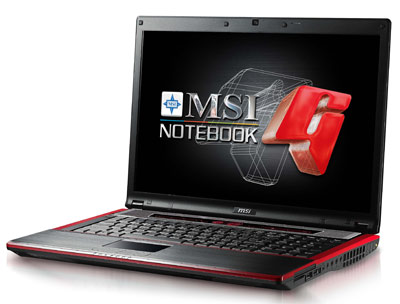
MSI Gaming Notebook GT735


MSI has unveiled three new gaming notebooks - the GX400, GX630, and GT735.

The 14.1-inch GX400 and 15.4-inch GX630 are based on Intel’s Centrino 2 mobile platform and feature Core 2 Duo processors and the Nvidia GeForce 9600M GT video cards. On the other side, the 17-inch GT735 is powered by AMD “Puma” technology, Turion X2 Ultra CPUs, and the ATi Mobility Radeon HD3850 dedicated graphics card.

The notebooks come with up to 4GB of DDR2 memory, up to 500GB of hard drive space, a DVD burner or Blu-Ray drive, built-in web camera, and HDMI output.

The GX400, GX630, and GT735 feature Turbo Drive Engine Technology, which enables users to increase the speed of the CPU when the laptop is in AC mode by pushing the turbo button.

There is also ECO Engine power management function that enables switching among 5 different operation modes – Gaming mode, Movie mode, Presentation mode, Office mode, and power saving Turbo Battery mode.

There is no information on pricing and availability of the new MSI gaming notebooks.


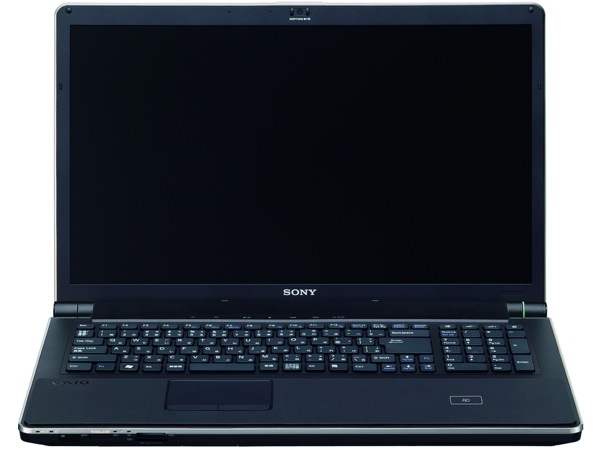
Sony VAIO Type A

Sony has unveiled the VAIO type A laptop for photographers and video editors.

The VAIO type A features a 18.4-inch display with LED backlit and a resolution of 1,920×1,080 pixels (full HD), the Intel Core 2 Duo T9400 processor at 2.53GHz, a Blu-ray burner, up to 4GB of RAM, and dual 250GB hard drives.

In addition, it has eSATA and Firewire ports, three USB 2.0 ports, and a “high-speed UDMA-enabled CF slot for quick image transfers off your DSLR’s CompactFlash card”.

“As Sony’s newest media flagship, we’re also looking at HDMI-out, 802.11n WiFi, GeForce 9600M GT graphics, and a full suite of included image and video editing software from Adobe. All this in a relatively hefty 3.9-kg (8.6-pounds) rig. Although, with just 2-hours of battery you’ll want to spring for the optional 3-hour add-on,” Engadget reports.

The new VAIO is priced at around ¥320,000 (around $3,000) and will be available in Japan at the end of September. There is no information on US availability.

Google fixes up Chrome flaws, launches Chrome blog

Google fixes up Chrome flaws, launches Chrome blogToday Google announced their progress and mission plan for taking care of the current and future security issues with their new Chrome browser. In particular, they revealed some details about the two biggest known flaws. Those have been fixed, along with some other minor issues.

Google also has opened a Chrome Releases blog, which they are using to openly document their progress on the browser. Unlike the often easily-readable release notes you normally expect from a browser like Firefox, Google wasn't all that revealing on what exactly it was they are doing with updates. With this, that seems to have changed.

The browser is facing criticism due to lack of site compatibility and other issues, but I think it is far too early after release to really judge what sort of browser it will be.

Asus Eee 901 reaches $500


Asus has faced a lot of criticism with their Eee line related to how they have become increasingly expensive. What was originally envisioned, sold and received as a very cheap solution with low powered hardware has turned into “netbooks” that are nearly as expensive as midrange laptops – and more expensive than bottom of the barrel laptops.

It seems they are realizing how out of touch they have become with that original focus and are talking a step backwards. The 901 has reached a $500 price point, coupled with the 1.6GHz Atom and a gig of ram. That's still a leap from the around $300 tag Asus was originally known for, one that made them look quite good at the time.

It's obvious the Eee line has grown far beyond the simple “cheap laptop” market that they started off in, but I hope Asus will dedicate at least a portion of their hardware lineup to ultra-cheap hardware.

Kamis, 03 Juli 2008

Enter X4 9950 Black Edition, 9350e the power saver

Hardware Wibblery The power above and below


AMD, AS WE MENTIONED earlier today, breathed some life in the Phenom CPU family – namely through the X4 9950, X4 9350e and X4 9150e.

Legit Reviews had the 9950 and 9350e on the bench – one, the dread high-end CPU and the other the power-efficient performer. They are quite different in power levels under load (140W vs. 65W). Overclocking isn’t thtat great, which means the only “Black” about the 9950 is possibly getting AMD in the black? They’re both winners, tho’. Don’t discard AMD right away. Catch the review here.

Ars Technica is also reviewing the X4 9350e. As the cheap low-power quad-core that it is, it moves quad-cores into the mainstream with some good points in its favour (price/performance/power). Its greatest virtue is having a matching twin, the 780G chipset, which should help it become a hit with the PC builders. Joel also tried his hand at underclocking to see just how low it could go (although there’s something called Cool’n’Quiet that should rev down your CPU and power consumption by itself, right?). Read it now.

Legion Hardware is redoing its HD4850 vs. 9800GTX face-off by adding a 9800GTX+ to the mess o’ cards. It’s quite shocking how marginal your gains with a 9800GTX+ are, over a 9800GTX and how equal it is to an HD4850, in the end coming down to shelf price, game title or availability. Still, they’re both great buys, says Steven. Read on.

If you enjoy movies on your PC, or have an HTPC plugged into your living room TV, you might want to read this here review. Bit Tech reviews the Pioneer BDC-SO2BK Blu-ray drive. Considering what a BD drive cost a while back, we have to say that 90 quid is quite affordable. Richard’s also got some tips for you to mull on in case you want the full HD experience to run stutter-free. Worth a read.

PC Perspective is plugging in Corsair’s HX1000W modular power supply. It looks like there were two power units built into one case, providing as much juice as you need for heavy-duty gaming rigs. This can support a Quad SLI setup and comes rated at 80+ efficiency, with modular cabling (as the name implies) which also has a second EPS12V cable that drives power to dual-CPU mobos in workstations or servers. Read it here.

Michael, down at Phoronix, the Land of Linux is testing a Super Micro mobo – yes Super Micro, that brand that put out tremendous amounts of workstation/server mobos in past times. The C2SBX+ is an X48-based board with all the bells and whistles that come with the territory – but the companion chip adds PCI-X functionality – now the board was faced-off with a couple of other Bearlakes but tied in performance. However, its price puts it way ahead of the competition: $250. Yeah. Just $250. Tremendous value, right here.

A mad Finn at Metku Mods has tested an OC’d GTX 280, ie: the XFX GTX 280 XXX Edition. The 1.4 billion transistor monster from Nvidia gets a little ahead of its brethren, even though its dressed in a reference cooler (we guess XFX cherry picks the lots). Right now it’s the fastest thing money can buy, until someone launches something faster, that is... So read on. ยต

Gigabyte overclocking tourney frenzy

Daily Rounds X58 mobos violated, abused


GIGABYTE HELD A TOURNAMENT in the US this past weekend to figure out who was the most clever overclocker in the land of the free. Now this isn’t a DIY, BYOC deal. Gigabyte supplied most of the hardware – equal for all participants – and each participant had to choose his own cooling system. Most used Liquid Nitrogen to cool the CPUs but the video cards were another matter entirely. They even managed to fry some expensive X58 mobos. The winner got a Gigabyte sponsorship to attend the World Cup in Taiwan, come September. You might think that’s cool (pun intended), so you might want to waltz on over here.

The forest-dwelling, dike-building, tooth-picking Hardware Canucks are reviewing Sapphire’s HD4850. The GPU’s performance has been the subject of many a review, but the software is still flaky, thinks the author. Current Catalyst drivers + hotfix are still a way away from providing stable/optimized performance, but it isn’t enough to stop droves of manic users from buying them. Dam good, he says.

Anandtech has jumped on the launch of the new Phenoms and reviewed the whole bunch right here. The launch has brought about a spate of re-pricing at AMD to fit in the newcomers, making things a bit more attractive on the retail side. Technically, however, the dynamic duo is less than pleased with the fine print. Comparing to its predecessor with non-“e” branding, the 9350e gives up in performance what it gains in power, and even then it’s fickle. Well, it’s a long story, well worth the read.

Tosh started marketing the U300 a couple of years back as a small, full-featured, notebook packing everything you need for gaming, entertainment and hard work. The original was a bit thick and square, the remake is much sharper - as you can see in InsideHW’s review here – but is slightly lacking in power. Not the best buy, thinks Sasa, but then again it’s only about 700 €urobucks. The U300 series has definitely taken a turn for the cheap.

HardOCP is doing some research on the new RV770’s power figures. They’ve completed their HD 4850 / 4870 review with the stats you can find standalone on this page. We must confess we’re quite surprised with the results: the HD 4870 draws more power than the GTX 280 OC, contrary to the popular wisdom. This’ll make for interesting reading.

Plastic toy jokes aside, we (the PC crowd) have always envied the design and “cool” factor that makes its way into Apple’s peripherals. And the Tech Lounge is reviewing the Apple Wireless Keyboard. Sleek, slim and stunning, we’d say. Brushed aluminium, and custom sized, the keyboard oozes quality and typing goodness (although Max says there’s a learning curve). Under OS X it’s great, under Windows... err... so-and-so... read it here.

Long time no see ... TV cards for the PC. Yeah, those. Again. Tech Power Up picked up a Powercolor TV Wonder 600 (PCIe x1) and put it through its test bench. We don’t pay much attention to TV cards these days, as video streaming has taken the lead, but if you’ve got an HTPC and want some recording done, it’s still a good proposition. The TV Wonder 600 is a hybrid tuner for both DVB-T TV and Radio, FM and analog TV. Get a shot of nostalgia, right here.

Tech Reviews in Old Blighty has a review of the Dutch-engineered Nexus HOC 9000 CPU cooler. This is an attempt to make a really silent high-performance cooler – using “heatpipe on CPU” technology, something already used in the S1283 from Xigmatek. Installation was frustrating, though, and it wasn’t as silent as desired. Good review, right here. ยต

IBM auto delete is a sound idea

IBM BOFFINS in India have apparently developed technology which automatically indentifies and then disguises sensitive information in audio recordings.

The technology, developed in Big Blue Brother's India Research Laboratory (IRL), is purportedly especially handy for call centers that record conversations between customers and outsourced call centre workers.

IBM’s director of IRL, Guruduth Banavar, told PC world that the new technology used speech analytics as well as metadata in order to track down bits in the recording with sensitive information like a customer’s credit card number, PIN number, ID number, etc. Once it found the relevant audio segments, the technology could then cleverly disguise the secretive bits with tasteful white noise, elegant silence, or a sleek announcement noting that “the information you are not about to hear has been edited”.

Apparently the technology is still only in its pilot phase, within the company itself, and it may be a little while yet before it gets itself ‘outsourced to India’.

But call centres aren’t the only place IBM hopes to be able to deploy its new ‘delete’ tech. The company also thinks it could do some healthy business by applying it to other areas like medical diagnosis and to disguise recorded information used for training purposes.

We think that this all sounds a bit [This information has been deleted for security reasons]. ยต


Mozilla gets into Guinness Book of Records

Most downloads for a flaming mammal


THE OUTFIT which markets the Firefox web browser, the Mozzarella Foundation, has heard from record keepers that it now holds the world record for the largest number of software downloads in a 24-hour period.

Guinness officials have decided that the final 8,002,530 downloads for Firefox 3.0, which took place last month, was indeed a world record.

A big cheese in Mozzarella's marketing department, Paul Kim said that the enthusiasm and creativity of Firefox fans was the key to making this happen.

Gareth Deaves of Guinness World Records said getting that many downloads down the wire, and getting enough Firebadger fans to do it within the first 24 hours, was no small feat.

The official figure was confirmed after logs from download servers were audited.

According to the Beeb, the actual certificate will be presented by Guinness World Records in London next week.

At their busiest the servers were handling more than 9,000 downloads per minute and it took only five hours for Version 3.0 downloads to exceed the 1.6 million set by Firefox 2.0 in October 2006.

Firebadger has 19 per cent of market share making it the second most popular browser after Microsoft's Internet Exploder. ยต

Google keeps search code secret

Viacom told to go forth and multiply

A FEDERAL Judge has told Viacom that it cannot have access to Google's secret search code as part of the evidence needed for its $1 billion copyright infringement lawsuit against the search outfit.

US District Judge Louis Stanton said it was a trade secret and could not be revealed without Google going down the gurgler.

He said that placing such a vital asset in the paws of the great unwashed merely to allay speculation was unfair.

The judge also refused to let Viacom's have a look under the bonnet of Google's Video Identification Tool, which helps notify Google of copyright infringement.

The judge did allow Viacom to take the records of every video watched by Youtube users, including their login names and IP addresses.

This means that anyone who posted a video on Youtube that Viacom thinks infringed its copyright could be taken to the cleaners.

The Electronic Frontier Foundation has called foul, saying that the ruling ignores the protections of the federal Video Privacy Protection Act and threatens to expose deeply private information. ยต

CrossfireX: 2560x1600 gameplay becomes a reality


YUP. IT’S THERE in big red letters, it’s the “AMD ATI Radeon 4850/4870 CrossfireX” review at Guru3D. Hilbert’s lost it again – high powered graphics have that effect on him... Anyway, what’s come to light, lately, is the high power consumption of the 4800 series (now double-up on the cards and imagine), and the irregular driver performance. You can see a broad spectrum of results, but when Hilbert gets CrossfireX to work, it works great. But do put things in perspective when reading: with the latest generation of graphics cards working in dual-GPU setups, you’ll be looking at buying a 30-inch LCD for 2560x1600 gameplay. Read it here.

XS Reviews is cracking open the Zalman GS1000 computer case, targeted at just about anyone who wants to build a supercomputer at home. It supports E-ATX and very long PCI cards and has hot-swappable bays for HDDs. Lots of space inside, if you’re “just” using a standard ATX mobo, but the panels are a bit dodgy, thinks the author. Not a snip at £100, but if Zalman could swap out those panels with something better, they’d have a winner. Read on.

A few years ago we were hack-napped off to a press conference abroad just to see how Philips would conquer the world of mobile telephony. Some 18 months later, Philips withdrew from the market, unable to compete with the big names and (our personal opinion) mostly due to their utterly rubbish user interface. Now Philips is reviving the brand (Xenium 9@9) in China with the brand new X800. ePrice in Taiwan has the review. The X800 is a full touchscreen design (no, you won’t have nightmares about the old Xeniums) and it looks like something out of HTC’s workshop, to be honest. Careful when reading the page, it didn’t play nice with Googlenglish, but you’ll get the gist (and the photos).

Andrew at Tweak Town took some time to write a guide on how to replace the heatspreaders on your RAM. Naturally it’s one of the warranty-voiding themes, but if you’re in need of improving cooling, it’s a necessary evil. Andrews outlines three basic methods to do this (hot, cold, lukewarm), but it all comes down to be REALLY careful with sharp metallic objects in close proximity of a PCB. Let loose the mad aussie scientist in you.

T-break had a party with the ECS P45T-A Black Edition. ECS isn’t really known as a top grade mobo maker, but it doesn’t fall behind the competition feature wise with this one. The board supports Crossfire, but it’ll break down the lanes into 2x8 as per the P45 specs, but when you try your hand at an overclock, Abbas thinks you’ll be left wanting. The “Black Edition” brings to mind ideas of modding, overclocking and serious tweaking. That isn’t the case, it seems. Good price, tho’. Read on.

Tosh has hit the Portรฉgรจ brand with its shrink ray and launched the G810. It’s no longer a notebook, as it were, it’s a Windows Mobile 6.0 smartphone with everything touchscreen. It’s targeted at the same market as the HTC Touch Cruise, but you really can’t avoid comparing the details with the iPhone. It’s HSDPA enabled and even includes GPS functionality. The only real thing going against it is the slow speed of the image capture (slow flash, we guess). $550 will buy you one. Read the review here.

Hardware Zone is gobsmacked by Gigabyte’s most extreme P45 mobo – the aptly named GA-EP45T-EXTREME. This board has it all, it seems, even a waterblock on the northbridge that runs liquid cooling to the southbridge and the rows of capacitors. It also allows you to stick in 3 ATI cards and is populated by a bevy of LEDs that alert you about your overclocking misdeeds. It’s only a preview, but it’s tasty.

Microsoft launches Office rental deal

THIS MONTH MICROSOFT will launch an annual subscription offer aimed at consumers covering Microsoft Office and other applications, in partnership with US computer and electronics retailer Circuit City.

The consumer rental bundle, called Equipt, will include a copy of the Home Office suite - consisting of Word, Excel and Powerpoint - plus Windows Live Onecare, Messenger, and Photo Gallery software and services. Onecare provides a set of PC security and optimisation tools that can be accessed online over the Interwibble.

A subscription will cost $69.99 per year and will licence the products to be used on up to three PCs. Punters will automatically receive software updates, assuming that the company releases any.

Microsoft has offered enterprise customers software subscription plans for several years. For business users such programmes offer the advantages of automatic software updates and predictable costs. The Vole hopes consumers will buy Equipt for the same reasons.

For about ten years, give or take a few, Microsoft could pretty much count on most business and home users to upgrade to its new releases of both Windows and Office every two to three years. However, as its software products have matured such that successive versions aren't as attractive to provide bug fixes and new, useful features, now Microsoft is trying to convert as many of its customers as possible to an annual software rental model.

To the extent the Vole's customers fall for this, it can start collecting a continuing stream of revenue without having to develop new application capabilities and features or fix any but the most crippling and annoying software bugs. It's passive income at high monopoly rents.

Many casual Office application users don't use more than the most basic features, manage their PCs by a default policy of benign neglect, and don't engage in PC instant messaging or collect photo albums on their PCs.

Since the Home version of MS Office sells for only $112, such users might not see compelling value in renting Equipt for a $69.99 annual fee. ยต


Vista replacing XP, not growing

THERE WAS DISSAPOINTMENT in Redmond last night as the latest market share figures show that Vole's Vista OS has seen a measly 2.56 per cent increase in market share over the last year.

Generally Windows' overall June total was slightly down 2.45 percentage points from the year before, indicating that Vista was merely replacing XP, not adding to Microsoft's share.

Apple's Mac OS X also seemed to take a healthy share of XP's demise. Its market share has increased by nearly 32 per cent. It now holds 7.94 per cent of the operating systems. A year ago, Mac OS X's usage share stood at 6.03 per cent.

Linux grew by 18 per cent, and has 0.88 per cent of the online operating system market.

All the gains have be achieved by carving up the corpses of XP and Windows 2000.

XP dropped by a full percentage point and Windows 2000 is now found on 2.11 per cent of online operating systems. ยต


Kamis, 29 Mei 2008

Nvidia GT200 sucessor tapes out

Playing the numbers game


THE LAST TIME Nvidia's CPU mouthed off about Intel, the firm followed it up with the stunning NV5800 'Dustbuster'. This time, he mouthed off, and the successor to the GT200 had already taped out. NV is in deep trouble once again.

You heard that right, the successor for the GT200 chip has already taped out, and it too will be nothing special. Documents seen by the INQ indicate that this one is called, wait for it, the GT200b, it is nothing more than a 55nm shrink of the GT200. Don't expect miracles, but do expect the name to change.

There are several problems with the GT200, most of which are near fatal. The first is the die size, 576mm^2, bigger than most Itanics. One might trust Intel to make a chip that big with decent yields, especially if it is basically an island of logic in the middle of a sea of cache. Nvidia using a foundry process doesn't have a chance of pulling this off.

Word has come out of Satan Clara that the yields are laughable. No, make that abysmal, they are 40 per cent. To add insult to injury, that 40 per cent includes both the 280 and the 260 yield salvage parts. With about 100 die candidates per wafer, that means 40 good dice per wafer. Doing the maths, a TSMC 300mm 65nm wafer runs about $5000, so that means each good die costs $125 before packaging, testing and the like. If they can get away with sub-$150 costs per GPU, we will be impressed.

So, these parts cost about $150, and the boards will sell for $449 and $649 for the 260 and 280 respectively, so there is enough play room there to make money, right? Actually, most likely yes. There are costs though, but not enough to kill profit for any one touching these.

The biggest cost is memory. The 512b memory width means that they will have to use at least 16 chips. This ends up making the board very complex when you have to route all those high speed signals, and that means more layers, more cost, and more defect fallout with the added steps. You also have to solder on eight more memory chips which costs yet more.

To add insult to injury, the TDPs of the 260 and 280 are 182W and 236W respectively. This means big copper heatsinks, possibly heatpipes, and high-end fans. Those parts cost a lot of money to buy, assemble and ship. Not fatal, but not a good situation either. It also precludes a dual GPU board without losing a lot of speed.

Basically, these boards are going to cost a lot of money to make, not just to buy. The $449 price is justified by the cost. The last round of GX2 boards cost OEMs about $425, meaning that NV charges OEMs about 70 per cent of retail for high-end parts. After packaging, shipping and add-ins, there is almost nothing left for the OEMs, quite possible explaining why one of their biggest one is teetering on the verge of bankruptcy, kept alive because NV won't call their debt while still shiping to them. Watch for this to melt down once NV loses the high end.

So, you end up with an expensive chip on an expensive board that makes few if any people money. Fair enough, bleeding-edge parts mean bleeding-edge prices. The problem is that ATI is going to make a chip that competes with GT200, and lines up with it point for point. NV wins big Z Fill, ATI crushes them on Shader Flops. What this translates to in the real world is still up in the air, but it looks like the 770 and the 260 will be about equal for most things.

The GT200 is about six months late, blew out their die size estimates and missed clock targets by a lot. ATI didn't. This means that buying a GT260 board will cost about 50 per cent more than an R770 for equivalent performance. The GT280 will be about 25 per cent faster but cost more than twice as much. A month or so after the 770 comes the 700, basically two 770s on a slab. This will crush the GT280 in just about every conceivable benchmark and likely cost less. Why? Because.

So, what is a company to do when it promised the financial world that ATI was lost, and GT200 would raise their margins by 100 basis points or so? Surely they knew what was coming a few weeks ago during their financial call, right? I mean, if word was leaking days later, the hierarchy surely was aware at the time, right?

The answer to that is to tape out the GT200b yesterday. It has taped out, and it is a little more than 400mm^2 on a TSMC 55nm process. Given that TSMC tends to price things so that on an equivalent area basis, the new process is marginally cheaper than the old, don't look for much cost saving there. Any decrease in defectivity due to smaller area is almost assuredly going to be balanced out by the learning curve on the new process. Being overly generous, it is still hard to see how the GT200b will cost less than $100 per chip. Don't look for much cost savings there.

The new shrink will be a much better chip though, mainly because they might fix the crippling clock rate problems of the older part. This is most likely not a speed path problem but a heat/power issue. If you get a better perf/watt number through better process tech, you can either keep performance the same and lower net power use, or keep power use the same and raise performance.

Given NV's woeful 933GFLOPS number, you can guess which way they are going to go. This means no saving on heatsinks, no savings on components, and a slightly cheaper die. For consumers, it will likely mean a $50 cheaper board, but no final prices have come my way yet. It will also mean a cheaper and faster board in a few months.

The GT200b will be out in late summer or early fall, instantly obsoleting the GT200. Anyone buying the 65nm version will end up with a lemon, a slow, hot and expensive lemon. Kind of like the 5800. It would suck for NV if word of this got out. Ooops, sorry.

What are they going to do? Emails seen by the INQ indicate they are going to play the usual PR games to take advantage of sites that don't bother checking up on the 'facts' fed to them. They plan to release the GT200 in absurdly limited quantities, and only four AIBs are going to initially get parts.

There is also serious talk of announcing a price drop to put them head to head with the R770 and giving that number to reviewers. When the boards come out, the reviews are already posted with the lower numbers, and no reviewer ever updates their pricing or points out that the price performance ratio was just blown out of the water. There is also internal debate about giving a few etailers a real price cut for a short time to 'back up' the 'MSRP'.

We would hope the reviewers are able to look at the numbers they were given on editors' day, $449 and $649, and take any $100+ last minute price drop with the appropriate chunk of NaCl. Just given the component cost, there is no way NV can hit the same price point as the 770 boards. "We lose money on each one, but we make it up in volume" is not a good long term strategy, nor is it a way to improve margins by 100 basis points.

In the end, NV is facing a tough summer in the GPU business. They are effectively out of the Montevina market, and they are going to lose the high end in a spectacular way. Nvidia has no effective countermeasure to the R770, the GT200 was quite simply botched, and now they are going to pay for it. When all you have is a hammer, everything looks like a 5800. ยต

Kamis, 15 Mei 2008


Epson - Stylus DX9400F review


The ongoing attraction of All-in-One printers shows no sign of diminishing and the latest Epson Stylus is designed to cram as many functions as possible within a compact body.

Measuring a tidy 435 x 219 x 165mm and weighing in at just 2.8kg, the DX9400F combines the roles of printing, copying, faxing and scanning into a stylish black casing that won't look out of place in a small office or home business setting.

It certainly won't be of much use for more demanding work, as the paper hopper at the back only holds a maximum of 80 sheets of A4, plus envelopes, and the automatic document feeder on the top can only handle an additional 30 sheets.

As you'll be buying this machine, at least in part, for its fax capability, it's perhaps surprising that it doesn't come with a phone/answering machine, so be aware that you'll have to provide your own.

The control panel at the front, however, is the current standard Epson format, with a four-function Mode dial on the left (handling Copy, Memory Card, Photo and Fax), a 2.5-inch LCD display which allows you to view, select and manipulate photos without having to use an attached PC, plus separate 4-way scroll, Setup and Menu buttons for more detailed settings.

The four individual DURABrite Ultra pigment ink cartridges are designed to be highly durable as well as smudge and water resistant. Print speed has been improved thanks to the revamped Micro Piezo print head which has increased the maximum size of the ink droplets and offers up to 5,760 x 1,440dpi optimised resolution. The scanner's top resolution is the usual 1,200 x 2,400dpi.

The resulting print quality is sharp, vibrant, authentic and detailed, but it still takes a good 5 minutes to produce a high quality, A4-sized colour print at highest resolution. A simple 10 x 15cm photo can be printed in around 90 seconds at the most basic setting and black text pages have a top rated speed of 25ppm.

The quality of colour print copying is disappointing, though, with a pinkish wash compared with the original. You might do better to copy directly from the memory card slots (which accommodate all the standard formats like Compact Flash, xD-Picture Card, SD and Memory Stick Pro) or from the PC.

Once set up, the fax has a few additional features like international colour to colour communication, both auto and manual answering modes, a 180-page memory and speed dial for up to 60 addresses.


Belarc - Belarc Advisor 7.2 review


Traverse the computing message boards and forums of the Internet, and there's always going to be a new post from a user struggling to identify the components that are sat inside their PC. Be it identification of something simple, such as a graphics card, through to the requirement for an exact name for a motherboard, it's a question that most of us have faced and many of us have answered.

The easiest way to head such a query off at the proverbial pass, though, is with the superb Belarc Advisor, now up to version 7.2. This is a comprehensive tool for rooting around the insides of your PC and revealing just what hardware lies within. Furthermore, there are no vagaries here: the answers you get are thorough and specific.

The program is a free-of-charge release from system management specialists Belarc, that's not even a couple of megabytes in size. Once opened, it invites you to check for security updates and then it requires generally just a minute or two to explore your computer (although it was nippier than that on our two testbed machines).

It generates a fairly formal looking report, perhaps the least user-friendly part of the program. However, the detail in the report is staggering. On top of identifying the exact nature of the hardware in the computer - right down to serial numbers if you need them - it also gives you an overview of your drives (and the remaining capacity on them), user accounts on your system (including last log-in times) and the build of your operating system.

And there's more. A lot more. Belarc Advisor digs right down into the software that's installed on the machine (including version numbers and serial numbers where appropriate), delivers a list of Windows hotfixes that have been installed and digs into the available devices on the system.

It's a staggeringly comprehensive report, that inevitably comes with a link to Belarc's system management products at the top, although it seems churlish to quibble with that given the level of information you're provided with. What's more, it's a program that answers a legitimate need, in a way that leaves you with no doubt whatsoever.

In an ideal world we'd like to see the report screen overhauled and just made a little more penetrable for the absolute novice user. But on the other hand, we admire the fuss-free way the tool uncovers, audits and reports on information without the need for fanfare or fuss. Belarc Advisor isn't a program you'll be needing very often, but it is a handy one to keep around.

Archos - TV+ review

Archos TV+ Photograph

Archos is best known for its music and media players, which are among the best liked, by those not buying Apple. The TV+ box is something of a departure for the company; a media streamer and PVR. This isn't a TV tuner - there's no Freeview or Sky compatibility built in - so it sits between a set-top box and your TV, feeding the signal through.

What it does do is take media from a server on your PC, via Ethernet or WiFi connections, and play it back on your TV screen. It can record up to 250GB of material on its built-in hard drive, too (there's an 80GB model for around £160).

Archos has remembered its media player customers with type A and B USB sockets on the side, so you can easily download media from the box to a player. On the back are connectors for composite, component and S-Video in and out, as well as S/PDIF and analogue, stereo sound. Two SCART conversion cables are also supplied.

The main box is controlled from a small square remote control, complete with QWERTY keypad and thumbpad for navigation. This is one of the best features of the box, and the on-screen menuing system is adequate, without having the flair of something like Apple TV.

To get the TV+ box to operate your TV tuner or set-top box and make recordings, it needs to be able to communicate with it. Somebody at Archos obviously decided to ‘think outside the box' and fitted it with an infra-red emitter, so it could simulate the signals from a manual remote control and work with a wide range of TV setups. To do this, though, the TV+ has to face the TV's I/R receiver, which means you can't stack it with your other TV equipment.

Other problems include the unit's lack of HD support. Although it has an HDMI socket on the back, it can't process HD signals so you're left with plain old TV. The take-up of HD is by no means universal, of course, but a device designed for the high-tech community, as the price tag suggests the TV+ is, should cater for it.

The box price isn't all you'll be paying, either; there's some important software missing, too. While you might argue that a Web browser for the TV+ should be an optional extra - it's a £20 download - things like MPEG-2 and QuickTime plug-ins should be standard equipment on a media streamer. If you buy all the plug-ins, the unit scrapes £300.

Jumat, 25 April 2008


Introducing ThinkPad X300


Lenovo's amazing new ThinkPad X300 ultraportable notebook is the thinnest ThinkPad ever – less than 0.73''at its thinnest. It's light, too, starting at just 2.93 lb.

But the X300 is more than ultra-thin and ultra-light. It's ultra-functional, too, thanks to available performance and convenience features like these:
Integrated DVD burner – Hard to find in such a thin system
Extended-life batteries
Get up to 10 hours unplugged
Easy connectivity
Advanced wireless options plus Gigabit Ethernet
Convenience – 3 USB ports, microphone/headphone ports and more

dvanced components on the X300 include solid state storage drives (with no moving parts, they consume less power and are considered less likely to break down than traditional hard drives). The X300 also offers several wireless connectivity options including Wireless USB (UWB) and a Wireless WAN option that utilizes native GPS functionality built into the system. Style-wise, the X300 is closer to the size of an actual paper notebook than a ThinkPad notebook has ever been. And it offers numerous design flourishes including a glossy bottom bezel, select illuminated buttons, and – for the first time in X Series – an integrated camera option and stereo speakers.

'Greenest' ThinkPad ever
In addition, ThinkPad X300 is the first Lenovo notebook rated EPEAT Gold for low energy use and minimal impact on the environment. It also meets the European Union's Reduction of Hazardous Substances standards. And it is Energy Star 4.0 qualified.

The X300 uses 25% less energy than previous X Series models. What else makes the ThinkPad X300 so “green”?
  • Energy-saving low voltage processors, LED backlit displays and solid state storage drives
  • Arsenic-free glass / Mercury-free displays
  • 90% recyclable packaging (by weight)
  • And much more

The Leader of the Pack? Hands-On Video of the HP 2133 Mini-Note

hp2133_g3.jpgIn the words of Nelly, “It’s getting hot in here!” In the low-cost laptop market that is. We can now welcome HP, the number-one PC manufacturer, to the sub-$500 notebook club. Today the company released its long-rumored low-cost laptop—the Mini-Note.

The HP 2133 Mini-Note is a full-function mini-notebook, starting at less than $500, and according to HP is designed for the education market. However, its different models have us thinking twice about this system being strictly for the kiddies. For instance, our $749 review unit, which is at the top of the Mini-Note line, was souped up with a 1.6-GHz Via processor, 2GB of RAM, a 7,200-rpm 120GB hard drive, a six-cell battery, Bluetooth, and Microsoft Vista Professional.

Sounds far from budget, right? However, HP is offering four different SKUs including ones with a SuSE Linux OS. See the chart below: